<?xml version="1.0" encoding="UTF-8"?>
<rss version="2.0"
	xmlns:content="http://purl.org/rss/1.0/modules/content/"
	xmlns:wfw="http://wellformedweb.org/CommentAPI/"
	xmlns:dc="http://purl.org/dc/elements/1.1/"
	xmlns:atom="http://www.w3.org/2005/Atom"
	xmlns:sy="http://purl.org/rss/1.0/modules/syndication/"
	xmlns:slash="http://purl.org/rss/1.0/modules/slash/"
	>

<channel>
	<title>Tallforeheads</title>
	<atom:link href="http://tallforeheads.com/?feed=rss2" rel="self" type="application/rss+xml" />
	<link>http://tallforeheads.com</link>
	<description>Smart People Helping Children with Down Syndrome</description>
	<lastBuildDate>Thu, 24 Jan 2013 16:54:24 +0000</lastBuildDate>
	<generator>http://wordpress.org/?v=2.8.6</generator>
	<language>en</language>
	<sy:updatePeriod>hourly</sy:updatePeriod>
	<sy:updateFrequency>1</sy:updateFrequency>
			<item>
		<title>Behavior Therapy &#8211; Only Ask Three Times &#8211;when your child won&#8217;t listen and obey</title>
		<link>http://tallforeheads.com/?p=591</link>
		<comments>http://tallforeheads.com/?p=591#comments</comments>
		<pubDate>Sat, 12 Feb 2011 16:04:27 +0000</pubDate>
		<dc:creator>admin</dc:creator>
				<category><![CDATA[Behavioral Therapy]]></category>

		<guid isPermaLink="false">http://tallforeheads.com/?p=591</guid>
		<description><![CDATA[Here&#8217;s a tip: After you have asked three times for your child to do something, stop being verbal and resort to gestures.
It&#8217;s one of those little annoyances that kids will do to manipulate us parents and caregivers for attention. Let&#8217;s face it, they all love the sound of mommy&#8217;s voice and the more they hear [...]]]></description>
			<content:encoded><![CDATA[<p>Here&#8217;s a tip: After you have asked three times for your child to do something, stop being verbal and resort to gestures.</p>
<p>It&#8217;s one of those little annoyances that kids will do to manipulate us parents and caregivers for attention. Let&#8217;s face it, they all love the sound of mommy&#8217;s voice and the more they hear it, the more satisfied they are!</p>
<p>Sit down!<br />
Come around the bed!<br />
Give to mommy!<br />
Wipe your chin!<br />
Lay still!<br />
Don&#8217;t move!</p>
<p>The list is endless, but you needn&#8217;t go hoarse repeating yourself. If you don&#8217;t know sign language that&#8217;s okay. Invent a gesture for each command. Using the command will switch gears in their brains where they go from auditory to visual and it may be enough to get the response you are looking for.</p>
]]></content:encoded>
			<wfw:commentRss>http://tallforeheads.com/?feed=rss2&amp;p=591</wfw:commentRss>
		<slash:comments>0</slash:comments>
		</item>
		<item>
		<title>Homeopathic Treatment of Children with Down Syndrome</title>
		<link>http://tallforeheads.com/?p=589</link>
		<comments>http://tallforeheads.com/?p=589#comments</comments>
		<pubDate>Wed, 02 Feb 2011 22:04:16 +0000</pubDate>
		<dc:creator>admin</dc:creator>
				<category><![CDATA[All Ages]]></category>
		<category><![CDATA[Homeopathy]]></category>

		<guid isPermaLink="false">http://tallforeheads.com/?p=589</guid>
		<description><![CDATA[Here is a great article I came across on how Homeopathy was used to treat several young children with Down syndrome in Paderborn, Germany to relieve a multitude of symptoms from:
Recurrent vomiting
Failure to thrive
Recurrent infections of the upper respiratory tract
Enuresis nocturna
Constipation
Sleep disturbances
Hyperactivity
Autism and emotional and neurotic ailments
www.Hpathy.com
]]></description>
			<content:encoded><![CDATA[<p>Here is a great article I came across on how Homeopathy was used to treat several young children with Down syndrome in Paderborn, Germany to relieve a multitude of symptoms from:</p>
<p>Recurrent vomiting<br />
Failure to thrive<br />
Recurrent infections of the upper respiratory tract<br />
Enuresis nocturna<br />
Constipation<br />
Sleep disturbances<br />
Hyperactivity<br />
Autism and emotional and neurotic ailments</p>
<p><a href="http://hpathy.com/homeopathy-papers/homeopathic-treatment-of-children-with-down-syndrome/" target="_blank">www.Hpathy.com</a></p>
]]></content:encoded>
			<wfw:commentRss>http://tallforeheads.com/?feed=rss2&amp;p=589</wfw:commentRss>
		<slash:comments>2</slash:comments>
		</item>
		<item>
		<title>Biting Humor</title>
		<link>http://tallforeheads.com/?p=587</link>
		<comments>http://tallforeheads.com/?p=587#comments</comments>
		<pubDate>Sun, 23 Jan 2011 03:52:52 +0000</pubDate>
		<dc:creator>Anne Marie</dc:creator>
				<category><![CDATA[Biting]]></category>
		<category><![CDATA[humor]]></category>

		<guid isPermaLink="false">http://tallforeheads.com/?p=587</guid>
		<description><![CDATA[I just have to report something funny! Our daughter, almost 3 years old, now brings her teeth to a body part of mine and lets me know, by letting her teeth and lips touch my skin, that she&#8217;s &#8220;about&#8221; to bite me. Then, with great speed, she pulls back, looks me straight in the eye with an [...]]]></description>
			<content:encoded><![CDATA[<p>I just have to report something funny! Our daughter, almost 3 years old, now brings her teeth to a body part of mine and lets me know, by letting her teeth and lips touch my skin, that she&#8217;s &#8220;about&#8221; to bite me. Then, with great speed, she pulls back, looks me straight in the eye with an intellectual look, taps her temple and says, &#8220;I remember, I remember!&#8221; &#8211;she still gets a rise out of me, only this time she knows she is making me smile!<br />
-Annie</p>
]]></content:encoded>
			<wfw:commentRss>http://tallforeheads.com/?feed=rss2&amp;p=587</wfw:commentRss>
		<slash:comments>0</slash:comments>
		</item>
		<item>
		<title>Biting &#8211; Reinforcing Good Behaviors</title>
		<link>http://tallforeheads.com/?p=574</link>
		<comments>http://tallforeheads.com/?p=574#comments</comments>
		<pubDate>Wed, 01 Dec 2010 15:31:53 +0000</pubDate>
		<dc:creator>admin</dc:creator>
				<category><![CDATA[Behavioral Therapy]]></category>
		<category><![CDATA[Biting]]></category>

		<guid isPermaLink="false">http://tallforeheads.com/?p=574</guid>
		<description><![CDATA[Nothing replaces a good therapist working with you, and I hope that you will find my blog posts inspiring but keep in mind that I am only reporting on what I am learning and experiencing as I make my way along this journey of behavioral changes.
This post is going to be short and sweet. It&#8217;s [...]]]></description>
			<content:encoded><![CDATA[<p>Nothing replaces a good therapist working with you, and I hope that you will find my blog posts inspiring but keep in mind that I am only reporting on what I am learning and experiencing as I make my way along this journey of behavioral changes.</p>
<p>This post is going to be short and sweet. It&#8217;s about looking for opportunities to reinforce the good stuff and pre-empting the bad behaviors by redirecting them into positive experiences.</p>
<p>My toddler is clever. She can smell a rat and already she knows we are trying to change her behavior. She is full of resistance and making more fuss than ever before. We have had to take smaller steps than before and we are looking at the littlest things to reinforce. Here&#8217;s our list:</p>
<p>- affection<br />
- peaceful behaviors<br />
- nice touching, nice use of hands<br />
- kindly asking for attention<br />
- good waiting (patience)<br />
- following directions, especially on the first request!</p>
<p>Repeat particular phrases over and over that reinforce the good behavior:<br />
- I like when you&#8217;re calm. It helps me help you.<br />
- I want to know what you need. Good asking/telling daddy.<br />
- When you are ready to tell me, I will listen. (reinforces: calm gets you what you want)<br />
- I like when you play nice with me.<br />
- That&#8217;s good waiting! Mommy likes it when you wait nicely for her.<br />
- When you are calm, mommy can help you.</p>
<p>Stay tuned as our journey continues&#8230;</p>
]]></content:encoded>
			<wfw:commentRss>http://tallforeheads.com/?feed=rss2&amp;p=574</wfw:commentRss>
		<slash:comments>0</slash:comments>
		</item>
		<item>
		<title>Biting &#8211; Trades for Preferred Tasks</title>
		<link>http://tallforeheads.com/?p=572</link>
		<comments>http://tallforeheads.com/?p=572#comments</comments>
		<pubDate>Tue, 30 Nov 2010 15:55:50 +0000</pubDate>
		<dc:creator>Anne Marie</dc:creator>
				<category><![CDATA[Behavioral Therapy]]></category>
		<category><![CDATA[Biting]]></category>
		<category><![CDATA[bargaining]]></category>
		<category><![CDATA[toddler]]></category>
		<category><![CDATA[trade]]></category>

		<guid isPermaLink="false">http://tallforeheads.com/?p=572</guid>
		<description><![CDATA[You need to teach your child &#8220;When I do what I&#8217;m asked, I get what I want.&#8221;  -Kerri Orr, Behavioral Therapist
Memorize this message because you will be teaching it to your child over and over again. In order to teach this, you must begin with simple trades that your child is capable of doing. For [...]]]></description>
			<content:encoded><![CDATA[<blockquote><p><em><strong>You need to teach your child &#8220;When I do what I&#8217;m asked, I get what I want.&#8221;</strong></em>  -Kerri Orr, Behavioral Therapist</p></blockquote>
<p>Memorize this message because you will be teaching it to your child over and over again. In order to teach this, you must begin with simple trades that your child is capable of doing. For example, my little gal doesn&#8217;t obey commands like &#8220;bring me your sippy cup&#8221; or &#8220;bring me a book and I will read it&#8221;. She does obey commands like &#8220;give me a high five&#8221; and &#8220;give mommy a kiss&#8221;. It&#8217;s a simple practice that I am weaving into my daily life that is teaching her that in order to get what she wants, she must give me something first as a trade.</p>
<p><strong>Bargaining examples for a young toddler:<br />
</strong>1.) My daughter looks at me in front of a chair and says &#8220;up&#8221; one of her first words and most often used. I tell her, &#8220;<span style="text-decoration: underline">First</span> give Mommy a kiss and <span style="text-decoration: underline">then</span> I will put you up!&#8221; Once I get the kiss (trade unit) I do what she wants (assistance).  <br />
2.) When she asked for cheese, I said, &#8220;First give Daddy a high-five and then I will give you some cheese.&#8221;<br />
3.) &#8220;I know you want to play. Can you give me your brush first? Then we will play.&#8221;</p>
<p><strong>Bargaining examples for an older toddler:<br />
</strong>1.) First bring me your shoes and then we will go for a walk.<br />
2.) First you need to eat then we will play.<br />
3.) I know you want to go to the park/playground. Thank you for telling me. We will go in ten minutes (set timer). First you need to play here for ten minutes and then mom will take you to the park/playground.</p>
<p><em>Always</em> keep your end of the bargain immediately after your child has kept their end to maintain consistency and trust.</p>
<p><strong>Another problem: Tissue in the mouth (aka, unacceptable item in mouth)</strong><br />
What child hasn&#8217;t chewed paper towel, toilet paper, facial tissues and random paper? My little gal takes after me in this respect as I used to make spit balls as a toddler and place them in little piles. My problem is that my daughter will chew the paper like chewing gum&#8230;and won&#8217;t spit it out into my hand when I ask her to. This non-compliant behavior could represent a safety issue somewhere else. It has to be handled correctly.</p>
<p><span style="text-decoration: underline">WARNING</span>: If you introduce food as something &#8216;appropriate for the mouth&#8217; to TRADE for the paper in the mouth you are establishing in the child&#8217;s mind the following: <span style="text-decoration: underline"><em>&#8220;If I have something bad in my mouth, mom will trade me some food for it. Therefore, all I have to do to get food is put something bad in my mouth.&#8221;</em></span></p>
<p><strong>Here&#8217;s a script for a correct trade</strong><br />
Mom: &#8220;Would you like some apple (something appropriate in the mouth)? <span style="text-decoration: underline">First</span> I need you to take that out of your mouth and give it to me, <span style="text-decoration: underline">then</span> you can have the apple.&#8221;</p>
<p>Stay tuned for more!</p>
]]></content:encoded>
			<wfw:commentRss>http://tallforeheads.com/?feed=rss2&amp;p=572</wfw:commentRss>
		<slash:comments>0</slash:comments>
		</item>
		<item>
		<title>Biting &#8211; &#8220;First, Then&#8221; Approach with Positive Reinforcement</title>
		<link>http://tallforeheads.com/?p=570</link>
		<comments>http://tallforeheads.com/?p=570#comments</comments>
		<pubDate>Wed, 24 Nov 2010 17:07:17 +0000</pubDate>
		<dc:creator>Anne Marie</dc:creator>
				<category><![CDATA[Behavioral Therapy]]></category>
		<category><![CDATA[Biting]]></category>
		<category><![CDATA[first-then approach]]></category>
		<category><![CDATA[puzzle pieces]]></category>

		<guid isPermaLink="false">http://tallforeheads.com/?p=570</guid>
		<description><![CDATA[Most people aren&#8217;t happy when someone, without any warning, does a &#8220;180&#8243; on them &#8211;meaning they change the subject, get up and walk away, leave them suddenly for something different and so on. Imagine a little child playing happily and then suddenly their playmate jumps up and gets the phone, makes a move to cook dinner, [...]]]></description>
			<content:encoded><![CDATA[<p>Most people aren&#8217;t happy when someone, without any warning, does a &#8220;180&#8243; on them &#8211;meaning they change the subject, get up and walk away, leave them suddenly for something different and so on. Imagine a little child playing happily and then suddenly their playmate jumps up and gets the phone, makes a move to cook dinner, etc.  In my limited experience with children with learning delays, they need time to process their communications that are incoming and outgoing. I try to count to ten before expecting an answer, for example, and I keep my mouth shut as best I can while my daughter is processing her answers before speaking. It&#8217;s not easy, and I do my best.</p>
<p><strong>Setting Expectations&#8230;and Reminders<br />
</strong>I didn&#8217;t realize that everytime I jump up and change directions I am confusing my daughter who is 2 years and 8 months at this writing. I can&#8217;t always offer some buffering but I am learning that it is important to set her expectations so she doesn&#8217;t get mad when I change directions. Here&#8217;s what I am doing now:</p>
<p>- &#8221;<span style="text-decoration: underline">First</span> we&#8217;ll read this book and <span style="text-decoration: underline">then</span> Mommy will take you for a walk/bath/etc.&#8221;<br />
&#8212;&#8211;&#8221;<span style="text-decoration: underline">Remember</span>: Mommy is going to take you for a walk now that we are done with reading a book.&#8221;<br />
- Set a timer for 2 minutes: &#8220;<span style="text-decoration: underline">First</span> we will play for two minutes and <span style="text-decoration: underline">then</span> Mommy has to go cook.&#8221;<br />
&#8212;&#8211;&#8221;<span style="text-decoration: underline">Remember</span>: When the timer goes off, Mommy is going to go to the kitchen to cook and Daddy is going to play with you.&#8221;</p>
<p><strong>Show them what they can do&#8230;<br />
</strong>If your child is old enough, show them pictures of activities that they might choose from to do when you are done or that someone else can do with them while you are busy with whatever it is that is going to disconnect you from your child.</p>
<p><strong>Puzzle pieces as a reward&#8230;</strong><br />
Cut an activity picutre card into three or four pieces and put them into your pocket. As your child does what you ask of them, reward them with a piece of the puzzle. When they collect all pieces and the picture of the activity is formed, you must drop everything and do that activity to reinforce their success at practicing acceptable and good behavior.</p>
<p><strong>Implement consistency&#8230;<br />
</strong>Using my problem as an example, when dinner time approaches, I can tell my daughter, &#8220;Head&#8217;s up! Mom has to cook in 2 minutes&#8221; &#8211;set the timer and train her to listen for the dinger/alarm so that she learns the sound and that means a change of program.</p>
<p><strong>Reinforce Appropriate Behavior&#8230;15 to 20 times a day!<br />
</strong>- Thank you for telling me how you are feeling.<br />
- Mommy knows how you feel/what you want now.<br />
- Thank you for asking nicely.<br />
- Good asking. High five!<br />
- Oh, someone&#8217;s mad: tell me why.</p>
<p><strong>Praising good behaviors&#8230;dozens of times a day!<br />
</strong>Make sure that your praise is appropriate for their age and that you are not giving a sticker, for example, to a toddler who will put it in their mouth and try to chew and swallow it. I know because I tried it and it backfired! One thing is for sure, you want your enthusiasm to reign supreme in giving praise right now. It&#8217;s essential that you do not give any bad behaviors a raised voice; but good deeds must be praised well enough for your child to notice the difference between regular talking and scolding (low tone/voice) and excited, joyful praise that says, &#8220;Gee, I must have really done something very exciting and good!&#8221;</p>
<p>Be sure to reinforce good behavior in the beginning 1 for 1. Later on, reward at a rate of 1 for 2 and then 1 for 3. In other words, the first several times they do what you want, praise, praise, praise. Then let your praise come every other time they do what you want. Later on, let it be every third time.</p>
<p><span style="text-decoration: underline">Mix and match any of these rewards:<br />
</span>- Verbal praise: Good talking! Good telling mom how you feel!<br />
- Activity praise: go play, read, walk outside, bath or pool time<br />
- Token praise: give a piece of food like a cracker, sticker, puzzle piece to an activity</p>
<p><strong>Reverse Reaction&#8230;<br />
</strong>If you are like me, and you have been yelping in pain everytime you&#8217;ve been bitten, and you gave a dramatic display of displeasure worthy of an Oscar, it is now time to reverse your reactions otherwise you will be played for a fool. Biting now gets a low toned, low volume reaction, &#8220;No biting! You just earned a time out! Two minutes!&#8221; and a dramatic drop into the crib on her diapered butt. No more dramatics for biting; it all must be saved for rewarding and reinforcing good behavior.</p>
<p>Stay tuned&#8230;more to come!</p>
]]></content:encoded>
			<wfw:commentRss>http://tallforeheads.com/?feed=rss2&amp;p=570</wfw:commentRss>
		<slash:comments>0</slash:comments>
		</item>
		<item>
		<title>Biting &#8211; One Solution to Changing the Problem: Teaching Your Child How to Communicate What They Want</title>
		<link>http://tallforeheads.com/?p=568</link>
		<comments>http://tallforeheads.com/?p=568#comments</comments>
		<pubDate>Mon, 22 Nov 2010 16:50:12 +0000</pubDate>
		<dc:creator>admin</dc:creator>
				<category><![CDATA[Behavioral Therapy]]></category>
		<category><![CDATA[Biting]]></category>

		<guid isPermaLink="false">http://tallforeheads.com/?p=568</guid>
		<description><![CDATA[My first meeting with Kerri Orr, our behavioral therapist was incredible. I took lots of notes and asked lots of questions. She led me through some scenarios that have already changed our lives and stopped more of the biting, which is becoming rarer as scratching started emerging. Yes, ouch!  Children with DS are very clever! [...]]]></description>
			<content:encoded><![CDATA[<p>My first meeting with Kerri Orr, our behavioral therapist was incredible. I took lots of notes and asked lots of questions. She led me through some scenarios that have already changed our lives and stopped more of the biting, which is becoming rarer as scratching started emerging. Yes, ouch!  Children with DS are very clever! Never bet against them and certainly never underestimate them or you will be very, very sorry.</p>
<p><strong>Defining Our Problem<br />
</strong>Our daughter has been allowed great independence and freedom to play, explore and do her own thing with great encouragement and praise&#8230;except for biting. First of all, she has never had anyone stop her from physically doing what she wants because she didn&#8217;t have the strength to resist and she does now. We have never negotiated with her and it is stunning how it is producing mini-tantrums now that we are putting conditions on things and I will address that in my next blog entry on the &#8220;First, Then&#8221; approach. Finally, although she has always been a great communicator with dozens of signs and some single word use, she never had to articulate her emotions which is a rather abstract concept&#8230;until now.  </p>
<p><strong>Are you mad?&#8230;<br />
</strong>We recently learned a  preschool &#8221;circle time&#8221; song that teaches emotions by how our face looks. I taught our daughter what happy, sad, mad, tired, yucky and scared faces look like and made it easy for her to replicate. At first, I didn&#8217;t think she was catching on, but when she had a big cognitive leap recently, she showed us that she knew all of them by demonstrating them outside the use of the song. Wow! You could have driven a Mack truck into my mouth the day she showed me &#8220;mad&#8221; when she was mad at me for forcing the last two pages of a book on her. I practically jumped over the moon with happiness. Since then, whenever I catch her getting frustrated or angry, I ask her if she is getting mad and she will cross her arms and pout. Then I thank her for telling me how she feels. And then I ask her what she wants.</p>
<p><strong>I want&#8230;<br />
</strong>Children bite, in my honest opinion, when they don&#8217;t get what they want. I lightly tap her chest and say, &#8220;I want&#8230;&#8221; followed by: &#8220;Tell mommy what you want&#8221; and then I wait for her to tell me. I mentally count to ten to give her time to process and then repeat the request. Most times, she is quick to tell me in sign language &#8220;play&#8221; or &#8220;book&#8221; or she will indicate some part of a song that she loves me to sing to her. Now she taps her chest to tell me &#8220;I want&#8221; followed by a quick look at me to make sure I am paying attention before she reveals what she wants. If nothing is forth coming, I make suggestions using the word and the sign so she can pick one. Never lose an opportunity to teach language!</p>
<p><strong>Stay calm&#8230;<br />
</strong>I sometimes have to raise my hands into the air in front of her at her eye level and slowly push the air down to the floor in a gentle, slow motion and say, &#8220;I like when you stay calm.&#8221; This reinforces that <span style="text-decoration: underline">calm behavior that will get her what she wants</span>: mommy listening to her needs.</p>
<p><strong>Praise&#8230;<br />
</strong>&#8220;Thank you. Mommy likes when you calmly tell her what you want.&#8221; And then I immediately do what she asked because if I don&#8217;t I am not reinforcing the positive behavior and holding up my end of the deal.</p>
<p><strong>Tip #4: Get a gate</strong><br />
Another device that has been incredibly helpful in reducing the bites to my legs while working in the kitchen has been a gate that is adjustable. For $25 I have peace of mind while working at the sink or counter while prepping at mealtimes when I seem to be in constant demand. Even though she hangs out at the gate watching me, making her sad faces, I talk to her and multitask. Occassionally, I trade her a kiss or high-five for a piece of cheese or a cracker. She has learned that mom is not always available even though she can see me; and I can&#8217;t help but appreciate how nice it is to be able to work in peace without doing the dance of keeping her mouth off my legs while she clings to me begging to be held or put up on the counters. Boundaries are a good thing!</p>
<p>Stay tuned! More to come&#8230;</p>
]]></content:encoded>
			<wfw:commentRss>http://tallforeheads.com/?feed=rss2&amp;p=568</wfw:commentRss>
		<slash:comments>0</slash:comments>
		</item>
		<item>
		<title>Biting &#8211; Take Notes for One Week and Notice Patterns</title>
		<link>http://tallforeheads.com/?p=566</link>
		<comments>http://tallforeheads.com/?p=566#comments</comments>
		<pubDate>Thu, 18 Nov 2010 17:00:35 +0000</pubDate>
		<dc:creator>admin</dc:creator>
				<category><![CDATA[Behavioral Therapy]]></category>
		<category><![CDATA[Biting]]></category>
		<category><![CDATA[Homeopathy]]></category>
		<category><![CDATA[tracking]]></category>

		<guid isPermaLink="false">http://tallforeheads.com/?p=566</guid>
		<description><![CDATA[It&#8217;s not like we parents have enough to do, but believe me, you will see patterns emerge with regards to biting if you do this for a few days to one week. Grab a sheet of paper and tack it to a wall or the fridge door and leave a pen nearby. Every time your [...]]]></description>
			<content:encoded><![CDATA[<p>It&#8217;s not like we parents have enough to do, but believe me, you will see patterns emerge with regards to biting if you do this for a few days to one week. Grab a sheet of paper and tack it to a wall or the fridge door and leave a pen nearby. Every time your little one bites you note the following:</p>
<p>- time of day<br />
- what led up to the biting behavior (e.g., jealousy over a toy, lack of attention)<br />
- was hunger or thirst involved<br />
- what were you doing (eating, email, telephone call, laundry, dishes, etc.)<br />
- near sleep, e.g., pre-naptime<br />
- during therapy sessions (specify which therapist)<br />
- anything else that might clue you in to why they bit you or another person</p>
<p><strong>Self-reflect and be honest!<br />
</strong>This will make you hyper aware of how you are contributing to the problem of biting and help you focus your efforts with changing your child&#8217;s behavior by modifying your own. Believe me, we are all addicted to being innocent &#8211;as in &#8220;I&#8217;m not guilty of causing my kid to bite me; I do everything for them!&#8221; but when I did a bit of self-inventory I had to admit that I was getting bitten most when I was doing email and talking on the phone. The next biggest time of getting bitten was because I was late with my daughter&#8217;s meal &#8211;by minutes. I adjusted my times to do these things and reduced biting greatly &#8211;like by half!</p>
<p><strong>Who else is getting bitten?<br />
</strong>If you are like me, a mom, you are probably the one getting the most bites and you have my utmost sympathy. It hurts! And it scars. Mom is the favorite target of biters with siblings and dad tied for second place. It&#8217;s not uncommon for care givers and therapists to also get bitten. This means that everyone must be involved in your efforts to modify your child&#8217;s behavior. To do this, it means that either a.) you explain everything you learn to your spouse, care givers, grammie and gramps, etc. and/or b.) make sure your behavioral therapist makes appointments to be present at your next therapy (PT, OT, VT, SLT, etc.) appointments. Don&#8217;t be shy and ask them to be present so you don&#8217;t misrepresent how these changes are going to take place.</p>
<p><strong>Tip #3: Homeopathy<br />
</strong>Yes, our homeopath mentioned that there are many remedies that can be used to help a child who bites, however, I have to confess that I never got around to investigating what remedies could have worked in my daughter&#8217;s case.  Remedies are created from things that are known to bite, induce biting, and such and while it is hard to explain other than using the Law of Similars &#8211;firefighting with fire, remedies are gentle medicine for children since they respond quickly and beautifully if the right remedy is identified. With Cuprum Metallicum (Cup Met), there is a constant protrusion and retraction of the tongue like snake when accompanied by rage.  Cup. Met., Lachesis, Belladonna and Stramonium are some other remedies used in children who bite but they must be prescribed and monitored by a homeopath who knows how to pick the correct remedy since biting is usually one symptom of many which a good homeopath will match up with your child&#8217;s nature and emotions, body type or constitution and other symptoms that may be present like teething or developmental delays.</p>
<p>More tips coming! Stay tuned!</p>
]]></content:encoded>
			<wfw:commentRss>http://tallforeheads.com/?feed=rss2&amp;p=566</wfw:commentRss>
		<slash:comments>0</slash:comments>
		</item>
		<item>
		<title>Biting &#8211; Introduction to Toddler Biting: Potential Causes and Non-Compliant Behavior</title>
		<link>http://tallforeheads.com/?p=563</link>
		<comments>http://tallforeheads.com/?p=563#comments</comments>
		<pubDate>Wed, 17 Nov 2010 01:16:29 +0000</pubDate>
		<dc:creator>Anne Marie</dc:creator>
				<category><![CDATA[Behavioral Therapy]]></category>
		<category><![CDATA[Biting]]></category>
		<category><![CDATA[non-compliance]]></category>
		<category><![CDATA[Teething]]></category>
		<category><![CDATA[time out]]></category>
		<category><![CDATA[toddler biting]]></category>

		<guid isPermaLink="false">http://tallforeheads.com/?p=563</guid>
		<description><![CDATA[Believe me when I say that we have tried everything (except biting our child back) to get our child to stop biting&#8230;and then some. So, what do you do when everything you have tried isn&#8217;t working? You have to start working with a behavioral therapist who can teach you more about how to stop the biting behavior by [...]]]></description>
			<content:encoded><![CDATA[<p>Believe me when I say that we have tried everything (except biting our child back) to get our child to stop biting&#8230;and then some. So, what do you do when everything you have tried isn&#8217;t working? You have to start working with a behavioral therapist who can teach you more about how to stop the biting behavior by pre-empting it, positive reinforcement and some collective cleverness by the people who work with your child on a daily basis.</p>
<p>This series of articles will be about my journey towards &#8221;A Life Without My Child Biting Me&#8221;. She has been biting since she first started teething and it has developed into a different matter altogether. Some children are biters, others are not. No one really knows why some young children bite and others don&#8217;t. It is as common an issue with normal/typical children as it is with children with DS. In this article, we&#8217;ll begin by looking at why children might bite and the common solutions people offer, why it is called Non-Compliant Behavior, why it can escalate and when it is time to call in an expert.</p>
<p><strong>Why do children bite?</strong><br />
Here is a list of some of the more common reasons in no particular order:<br />
- teething/dentition<br />
- anger or frustration from either a.) a lack of attention or b.) inability to articulate their needs<br />
- hunger/thirst (generally because their attempts to get fed went unnoticed)<br />
- a need to use their molars; work their jaw muscles and grind and chew<br />
- sensory input and exploration<br />
- using their teeth to hold on, for stability, as they move their hands and feet when unsteady</p>
<p><strong>What people have told me to do to fix the problem:<br />
</strong>- bite them back (this only teaches them that it is acceptable behavior although people who have had success with this will argue with me)<br />
- provide teething rings and toys to accomodate the need to chew<br />
- wait until they are older and not in the sensory input stage (aka, &#8220;This stage will pass.&#8221;)<br />
- give them a time out (1 minute per year of age) each time they bite someone; say &#8220;NO BITING!&#8221; in a stern voice and put them in their crib to wait it out.<br />
- paint the objects they bite with bitters to discourage biting<br />
- give them a chicken drumstick bone that is clean (I don&#8217;t recommend this at all as bones can splinter)<br />
- give your child some dried meat (jerky)<br />
- spray them with water when they bite<br />
- put hot sauce in their mouth when they bite someone</p>
<p><strong>Try this first:<br />
</strong>Last year, I read a study(forgive me on this, but I do not know who to credit this research to) given to my by her teacher from the Alcott Infant &amp; Toddler Program that stated some interesting findings on preschoolers and biting. In the article, biting dropped significantly when the children were fed meat such as bacon, sausage, hot dogs and other proteins that required chewing at breakfast. Children would bite more when fed softer foods like oatmeal, fruit and cereals. It suggested that all biting disappeared when all children ate some form of meat in the morning. It&#8217;s worth trying first since it is an easy approach. I tried it and found that it works best if I meet all of the following criteria: a.) I feed my child before she gets too hungry, b.) I feed her protein that she must chew at every meal, and c.) I also pay attention to her signals for attention. If I can do all three all day long, I remain intact from her choppers and score one big one for mom. Sounds easy, doesn&#8217;t it, but in reality it is much harder to do in practice. And by the way, eggs don&#8217;t seem to help much with preventing biting. Great brain and eye food, but not much help in the biting department!</p>
<p><strong>Tip Number Two: Time Out!</strong><br />
All biters need to become aware that they are doing something that is not acceptable. The moment they bite, you have to lower your voice, do not react from the pain (very, very hard to do!), tell them, &#8220;No biting! You get a Time Out!) and place them somewhere safe like their crib or playpen where they can be isolated without toys for one minute per year of age. This is important because minutes equal attention span and if you try for more than they can remember, you lose the lesson. A two year old will react to being put into a crib with frustration and anger, possibly cry and rattle the crib while the message sinks in. However, if your child is anything like mine, after two minutes, she makes herself comfortable and starts playing or talking to herself and her mind is gone from the lesson. After the required time out is over &#8211;and by the way, use a timer go and pick them up and tell them, &#8220;Remember, no biting! Ok?&#8221;  Note: Time outs don&#8217;t always work, but they have their place and it is a useful tool that you can use for other things like throwing, hitting and scratching. It will eventually sink in, but again, it is a numbers game and routine and repetition is what is called for. You must be consistent everytime you correct your child.</p>
<p><strong>Getting Professional Help<br />
</strong>Almost at my wits end and covered in bite marks surrounded by bruises, I consulted my case worker at the Regional Center and requested some help. I am now working with a behavioral therapist named Kerri Orr, who is brimming with inspiration, hope and suggestions that I have never heard before. I had no idea until our first and second meeting just how much I needed help.</p>
<p><strong>Biting is Non-Compliant Behavior</strong><br />
Think about it for a minute. Don&#8217;t you tell your child not to bite and they continue to ignore you? If you explore further, you can look around and find other Non-Compliant Behavior elsewhere. For example, does your child obey you when you say any of the following:</p>
<p>- give that to mama<br />
- take that out of your mouth (and give that to me)<br />
- hold my hand/give me your hand<br />
- use two/both hands<br />
- don&#8217;t put that in your mouth<br />
- wait for me<br />
- don&#8217;t (__<span style="text-decoration: underline">fill in the blank</span>___) &#8211;mine are bite, throw that, pull the plant, eat that, etc.</p>
<p>Yes, toddlers are striving for independence and exploring how far reaching their power is however it should not be hurting you or any other person in the process.  </p>
<p>My next post will reveal the techniques we are trying and the results we are getting. Stay tuned!</p>
]]></content:encoded>
			<wfw:commentRss>http://tallforeheads.com/?feed=rss2&amp;p=563</wfw:commentRss>
		<slash:comments>0</slash:comments>
		</item>
		<item>
		<title>Down Syndrome and Ear Problems</title>
		<link>http://tallforeheads.com/?p=534</link>
		<comments>http://tallforeheads.com/?p=534#comments</comments>
		<pubDate>Tue, 22 Jun 2010 22:46:35 +0000</pubDate>
		<dc:creator>admin</dc:creator>
				<category><![CDATA[Ears, Nose and Throat]]></category>
		<category><![CDATA[Speech Therapy]]></category>

		<guid isPermaLink="false">http://tallforeheads.com/?p=534</guid>
		<description><![CDATA[Children born with Down Syndrome may have significant problems in the region of the ear, nose, and throat.  This article will focus on major ear problems and interventions for children with ear issues. ]]></description>
			<content:encoded><![CDATA[<p>Down Syndrome and Ear Problems<br />
Contributed by Dr. Marcella Bothwell, MD</p>
<p>Children born with Down Syndrome may have significant problems in the region of the ear, nose, and throat.  This article will focus on major ear problems and interventions for children with ear issues.  The 3 major issues to be concerned about are the following and will be explained in more detail.</p>
<ul>
<li>External      Ear Canal Stenosis or narrowing</li>
<li>OME      (Otitis Media with Effusion) or fluid in the middle ear</li>
<li>Two      types of hearing loss, Conductive Hearing Loss (CHL) and Sensorinerural      (SNHL)</li>
</ul>
<p>1)<span style="text-decoration: underline"> External Ear Canal Stenosis</span>: affects up to 50% of newborns with Down Syndrome and can make it difficult to see your child’s ear drum (tympanic membrane).  Visualization is required for the diagnosis of ear infections or chronic ear fluid.  An ENT or Otolaryngologist / Head and neck surgeon may recommend cleaning with a microscopic exam up to every 3 months for ideal visualization.  Ideally by 2-3 years, the ear canals may have grown enough not to need such frequent cleaning.  Please do not use any Q-tips to clean ears because it actually makes the wax impaction (clogging of ear canal) worse.</p>
<p>2) <span style="text-decoration: underline">Otitis Media with Effusion (OME)</span>: fluid in the middle ear may be chronic and not be acutely infected. Sometimes however it can also be a more typical ear infection with fever and pain.  Reasons for having more ear problems are:</p>
<ul>
<li>Reduction      of the immune system (both T and B cell function) which may increase upper      respiratory infections or colds</li>
<li>Eustachian      tube (ET) dysfunction or abnormal function of the tube between the ear and      nose.  Causes are usually anatomical      or structural such as:  mid face      hypoplasia or flattening; the shape of the Eustachian may have a smaller      width;  and / or the cartilage      density may make it weaker causing collapse.  Hypotonia or general muscle weakness may      not just be in the core muscles but also in the muscle that opens the ear      or ET i.e. the tensor veli palatini muscle dysfunction which opens and      closes ET.  Because of the above      reasons, Eustachian Tube Dysfunction (ETD) persists much longer compared      to other children without DS.       However there are no studies that show the expected length of time      for persistent OME.</li>
</ul>
<p>3.) <span style="text-decoration: underline">Hearing loss can either be conductive (CHL) or sensorineural (SNHL)</span>:</p>
<p>In a prospective study of children with Down Syndrome it was reported by Shott that 98% had normal hearing at one year enrollment but 83% of children required ear tubes due to chronic ear infections or OME. Balkany in 1979 reported 83% of hearing loss is conductive with 60% of the conductive loss due to chronic fluid or perforations.  40% was ossicular (hearing bones of the ear) either congenital or due to secondary erosion. However, Harado and Sandi in 1981 reported, 25% of patients with DS were evaluated at surgery where no obvious anatomic abnormalities were found. 4-20% SNHL or mixed hearing loss is also reported.</p>
<p>Hearing testing is done at birth by BAER (Brainstem Audio Evoked Potential)/ OAE (Otoacoustic Emission) testing and every 6 months following until ear specific information can be attained with Behavioral or pure tone audiogram (hearing testing)</p>
<p>At age 3, 12% of children were able to get ear specific information and by age 4, 41% were successful at behavioral hearing testing.</p>
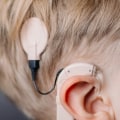
<p>Remedies to hearing loss include:  Ossicular reconstruction and Amplification (hearing aides).  Remedy is important due to delayed expressive language skills compared to cognitive abilities.  By helping children with Down syndrome express their needs, their disabilities may improve.</p>
<div id="_mcePaste" style="width: 1px;height: 1px;overflow: hidden"><!--[if gte mso 9]&gt;  800x600  &lt;![endif]--><!--[if gte mso 9]&gt;  Normal 0     false false false  EN-US X-NONE X-NONE            MicrosoftInternetExplorer4              &lt;![endif]--><!--[if gte mso 9]&gt;                                                                                                                                            &lt;![endif]--><!--  /* Font Definitions */  @font-face 	{font-family:Wingdings; 	panose-1:5 0 0 0 0 0 0 0 0 0; 	mso-font-charset:2; 	mso-generic-font-family:auto; 	mso-font-pitch:variable; 	mso-font-signature:0 268435456 0 0 -2147483648 0;} @font-face 	{font-family:Wingdings; 	panose-1:5 0 0 0 0 0 0 0 0 0; 	mso-font-charset:2; 	mso-generic-font-family:auto; 	mso-font-pitch:variable; 	mso-font-signature:0 268435456 0 0 -2147483648 0;}  /* Style Definitions */  p.MsoNormal, li.MsoNormal, div.MsoNormal 	{mso-style-unhide:no; 	mso-style-qformat:yes; 	mso-style-parent:""; 	margin:0in; 	margin-bottom:.0001pt; 	mso-pagination:widow-orphan; 	font-size:12.0pt; 	font-family:"Times New Roman","serif"; 	mso-fareast-font-family:"Times New Roman";} .MsoChpDefault 	{mso-style-type:export-only; 	mso-default-props:yes; 	font-size:10.0pt; 	mso-ansi-font-size:10.0pt; 	mso-bidi-font-size:10.0pt;} @page WordSection1 	{size:8.5in 11.0in; 	margin:1.0in 1.0in 1.0in 1.0in; 	mso-header-margin:.5in; 	mso-footer-margin:.5in; 	mso-paper-source:0;} div.WordSection1 	{page:WordSection1;}  /* List Definitions */  @list l0 	{mso-list-id:664430863; 	mso-list-type:hybrid; 	mso-list-template-ids:1417056130 -304987130 481598460 -2141936546 1359625056 924243060 122972860 1100622490 -698161274 -2116267798;} @list l0:level1 	{mso-level-number-format:bullet; 	mso-level-text:; 	mso-level-tab-stop:.5in; 	mso-level-number-position:left; 	text-indent:-.25in; 	font-family:Wingdings;} @list l0:level2 	{mso-level-start-at:167; 	mso-level-number-format:bullet; 	mso-level-text:; 	mso-level-tab-stop:1.0in; 	mso-level-number-position:left; 	text-indent:-.25in; 	font-family:Wingdings;} @list l0:level3 	{mso-level-start-at:167; 	mso-level-number-format:bullet; 	mso-level-text:; 	mso-level-tab-stop:1.5in; 	mso-level-number-position:left; 	text-indent:-.25in; 	font-family:Wingdings;} @list l0:level4 	{mso-level-number-format:bullet; 	mso-level-text:; 	mso-level-tab-stop:2.0in; 	mso-level-number-position:left; 	text-indent:-.25in; 	font-family:Wingdings;} @list l0:level5 	{mso-level-number-format:bullet; 	mso-level-text:; 	mso-level-tab-stop:2.5in; 	mso-level-number-position:left; 	text-indent:-.25in; 	font-family:Wingdings;} @list l0:level6 	{mso-level-number-format:bullet; 	mso-level-text:; 	mso-level-tab-stop:3.0in; 	mso-level-number-position:left; 	text-indent:-.25in; 	font-family:Wingdings;} @list l0:level7 	{mso-level-number-format:bullet; 	mso-level-text:; 	mso-level-tab-stop:3.5in; 	mso-level-number-position:left; 	text-indent:-.25in; 	font-family:Wingdings;} @list l0:level8 	{mso-level-number-format:bullet; 	mso-level-text:; 	mso-level-tab-stop:4.0in; 	mso-level-number-position:left; 	text-indent:-.25in; 	font-family:Wingdings;} @list l0:level9 	{mso-level-number-format:bullet; 	mso-level-text:; 	mso-level-tab-stop:4.5in; 	mso-level-number-position:left; 	text-indent:-.25in; 	font-family:Wingdings;} @list l1 	{mso-list-id:1981618037; 	mso-list-type:hybrid; 	mso-list-template-ids:291030340 1993536708 -1682264174 -360417594 41180492 -1735514052 171858876 -1205701928 1723499164 343680446;} @list l1:level1 	{mso-level-number-format:bullet; 	mso-level-text:; 	mso-level-tab-stop:.5in; 	mso-level-number-position:left; 	text-indent:-.25in; 	font-family:Wingdings;} @list l1:level2 	{mso-level-number-format:bullet; 	mso-level-text:; 	mso-level-tab-stop:1.0in; 	mso-level-number-position:left; 	text-indent:-.25in; 	font-family:Wingdings;} @list l1:level3 	{mso-level-number-format:bullet; 	mso-level-text:; 	mso-level-tab-stop:1.5in; 	mso-level-number-position:left; 	text-indent:-.25in; 	font-family:Wingdings;} @list l1:level4 	{mso-level-number-format:bullet; 	mso-level-text:; 	mso-level-tab-stop:2.0in; 	mso-level-number-position:left; 	text-indent:-.25in; 	font-family:Wingdings;} @list l1:level5 	{mso-level-number-format:bullet; 	mso-level-text:; 	mso-level-tab-stop:2.5in; 	mso-level-number-position:left; 	text-indent:-.25in; 	font-family:Wingdings;} @list l1:level6 	{mso-level-number-format:bullet; 	mso-level-text:; 	mso-level-tab-stop:3.0in; 	mso-level-number-position:left; 	text-indent:-.25in; 	font-family:Wingdings;} @list l1:level7 	{mso-level-number-format:bullet; 	mso-level-text:; 	mso-level-tab-stop:3.5in; 	mso-level-number-position:left; 	text-indent:-.25in; 	font-family:Wingdings;} @list l1:level8 	{mso-level-number-format:bullet; 	mso-level-text:; 	mso-level-tab-stop:4.0in; 	mso-level-number-position:left; 	text-indent:-.25in; 	font-family:Wingdings;} @list l1:level9 	{mso-level-number-format:bullet; 	mso-level-text:; 	mso-level-tab-stop:4.5in; 	mso-level-number-position:left; 	text-indent:-.25in; 	font-family:Wingdings;} ol 	{margin-bottom:0in;} ul 	{margin-bottom:0in;} --><!--[if gte mso 10]&gt; &lt;!   /* Style Definitions */  table.MsoNormalTable 	{mso-style-name:&quot;Table Normal&quot;; 	mso-tstyle-rowband-size:0; 	mso-tstyle-colband-size:0; 	mso-style-noshow:yes; 	mso-style-priority:99; 	mso-style-parent:&quot;&quot;; 	mso-padding-alt:0in 5.4pt 0in 5.4pt; 	mso-para-margin:0in; 	mso-para-margin-bottom:.0001pt; 	mso-pagination:widow-orphan; 	font-size:10.0pt; 	font-family:&quot;Times New Roman&quot;,&quot;serif&quot;;} --> <!--[endif]--></p>
<p class="MsoNormal">Down Syndrome and Ear Problems</p>
<p class="MsoNormal">
<p class="MsoNormal">Children born with Down Syndrome may have significant problems in the region of the ear, nose, and throat.<span> </span>This article will focus on major ear problems and interventions for children with ear issues.<span> </span>The 3 major issues to be concerned about are the following and will be explained in more detail.</p>
<ul style="margin-top: 0in" type="square">
<li class="MsoNormal">External      Ear Canal Stenosis or narrowing</li>
<li class="MsoNormal">OME      (Otitis Media with Effusion) or fluid in the middle ear</li>
<li class="MsoNormal">Two      types of hearing loss, Conductive Hearing Loss (CHL) and Sensorinerural      (SNHL)<span> </span></li>
</ul>
<p class="MsoNormal">
<p class="MsoNormal">1) External Ear Canal Stenosis: affects up to 50% of newborns with Down Syndrome and can make it difficult to see your child’s ear drum (tympanic membrane).<span> </span>Visualization is required for the diagnosis of ear infections or chronic ear fluid.<span> </span>An ENT or Otolaryngologist / Head and neck surgeon may recommend cleaning with a microscopic exam up to every 3 months for ideal visualization.<span> </span>Ideally by 2-3 years, the ear canals may have grown enough not to need such frequent cleaning.<span> </span>Please do not use any Q-tips to clean ears because it actually makes the wax impaction (clogging of ear canal) worse.</p>
<p class="MsoNormal">
<p class="MsoNormal">2) Otitis Media with Effusion (OME): fluid in the middle ear may be chronic and not be acutely infected. Sometimes however it can also be a more typical ear infection with fever and pain.<span> </span>Reasons for having more ear problems are:</p>
<ul style="margin-top: 0in" type="square">
<li class="MsoNormal">Reduction      of the immune system (both T and B cell function) which may increase upper      respiratory infections or colds</li>
<li class="MsoNormal">Eustachian      tube (ET) dysfunction or abnormal function of the tube between the ear and      nose.<span> </span>Causes are usually anatomical      or structural such as:<span> </span>mid face      hypoplasia or flattening; the shape of the Eustachian may have a smaller      width;<span> </span>and / or the cartilage      density may make it weaker causing collapse.<span> </span>Hypotonia or general muscle weakness may      not just be in the core muscles but also in the muscle that opens the ear      or ET i.e. the tensor veli palatini muscle dysfunction which opens and      closes ET.<span> </span>Because of the above      reasons, Eustachian Tube Dysfunction (ETD) persists much longer compared      to other children without DS.<span> </span>However there are no studies that show the expected length of time      for persistent OME.</li>
</ul>
<p class="MsoNormal">
<p class="MsoNormal">2) Hearing loss can either be conductive (CHL) or sensorineural (SNHL):</p>
<p class="MsoNormal">
<p class="MsoNormal">In a prospective study of children with Down Syndrome it was reported by Shott that 98% had normal hearing at one year enrollment but 83% of children required ear tubes due to chronic ear infections or OME. Balkany in 1979 reported 83% of hearing loss is conductive with 60% of the conductive loss due to chronic fluid or perforations.<span> </span>40% was ossicular (hearing bones of the ear) either congenital or due to secondary erosion.</p>
<p class="MsoNormal">However, Harado and Sandi in 1981 reported, 25% of patients with DS were evaluated at surgery where no obvious anatomic abnormalities were found. 4-20% SNHL or mixed hearing loss is also reported.</p>
<p class="MsoNormal">
<p class="MsoNormal">Hearing testing is done at birth by BAER (Brainstem Audio Evoked Potential)/ OAE (Otoacoustic Emission) testing and every 6 months following until ear specific information can be attained with Behavioral or pure tone audiogram (hearing testing)</p>
<p class="MsoNormal">At age 3, 12% of children were able to get ear specific information and by age 4, 41% were successful at behavioral hearing testing.</p>
<p class="MsoNormal">
<p class="MsoNormal">Remedies to hearing loss include:<span> </span>Ossicular reconstruction and Amplification (hearing aides).<span> </span>Remedy is important due to delayed expressive language skills compared to cognitive abilities.<span> </span>By helping children with Down syndrome express their needs, their disabilities may improve.</p>
</div>
]]></content:encoded>
			<wfw:commentRss>http://tallforeheads.com/?feed=rss2&amp;p=534</wfw:commentRss>
		<slash:comments>0</slash:comments>
		</item>
	</channel>
</rss>